A Professional Guide for PMU Artists & Training Academies
Permanent makeup (PMU) has evolved far beyond traditional tattooing. Today’s PMU artists must understand skin behavior, pigment choice, needle control, and technique selection to achieve natural, long-lasting results.
For PMU training schools and professional artists, mastering the right permanent makeup techniques is essential — not only for beautiful healed results, but also for client safety and satisfaction.
Below, we break down five core permanent makeup techniques every PMU artist should understand, including their strengths, limitations, and ideal use case.
1. Microblading (Manual Hair Stroke Brows)
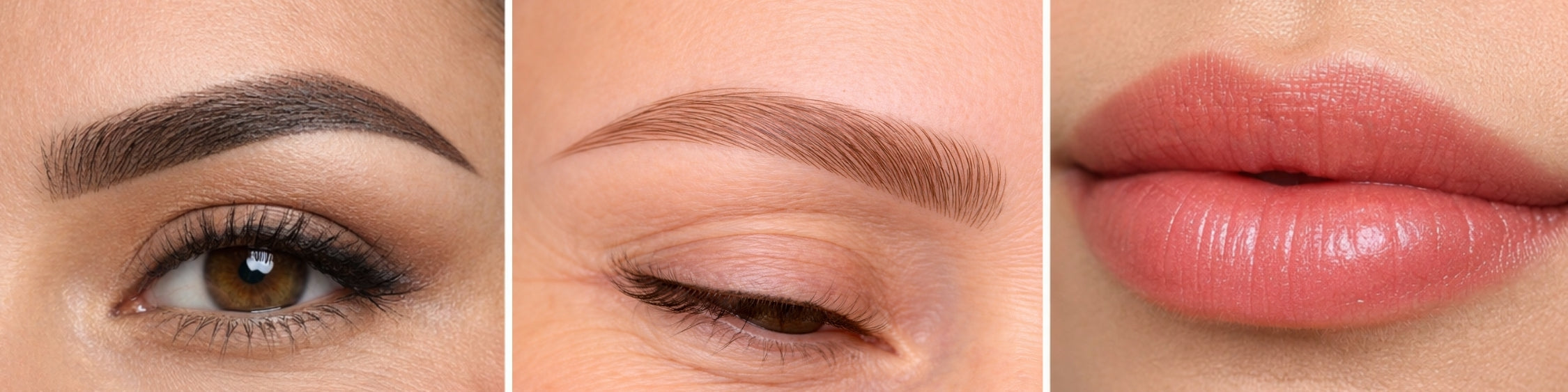
Microblading Eyebrows – Traditional Manual Technique
Microblading is one of the most recognized eyebrow tattoo techniques worldwide. It uses a manual handheld blade to create hair-like strokes that imitate natural eyebrow hairs.
When performed correctly on suitable skin types, microblading can deliver beautiful, realistic brows. However, this technique requires precise depth control, as deeper incisions can increase the risk of scarring or long-term blurring.
Important for PMU students to understand:
-
Best suited for dry to normal skin
-
Not ideal for oily, mature, or sensitive skin
-
Hair strokes may blur over time if placed too deep
-
Requires excellent manual pressure control
👉 Many PMU academies now teach microblading alongside machine techniques to ensure artists understand skin limitations and long-term outcomes.
2. Nano Brows (Machine Hair Stroke Technique)
Nano Brows – Advanced Machine Hair Strokes

Nano brows are created using a PMU machine with ultra-fine needles, allowing artists to implant pigment with more control and less trauma compared to manual blades.
This technique is popular among modern PMU artists because it offers:
However, nano brows still require excellent technical skill. Incorrect needle depth or pigment choice can still result in blurred strokes over time.
Key training points:
-
Requires understanding of skin layers
-
Pigment selection is critical
-
Stroke direction and spacing matter
3. Ombre Brows / Powder Brows (Machine Shading)
Ombre Brows – Soft Shading with Long-Term Stability

Ombre brows (also known as powder brows) are one of the most requested permanent makeup brow techniques in the US and EU.
Using a digital PMU machine, artists build soft layers of pigment to create a gradient effect — lighter at the front and deeper toward the tail.
This technique is widely favored because it:
-
Heals evenly
-
Works well on most skin types
-
Provides excellent color retention
-
Offers a soft, makeup-like finish
Many PMU training schools consider ombre brows a foundation technique for beginners due to its predictability and long-term results.
4. Combo Brows (Hair Strokes + Shading)
Combo Brows – Depth, Structure, and Dimension

Combo brows combine machine shading with hair stroke detailing, offering a balance between softness and definition.
Typically, shading is used to build density and structure, while hair strokes are added strategically for realism — especially in sparse areas.
Professional insight:
-
Hair strokes are not suitable for every client
-
Shading alone often produces the most stable healed results
-
Combo brows should be customized, not overused
For advanced PMU artists, combo brows allow flexibility while maintaining natural outcomes when executed thoughtfully.
5. Lip Blush (Permanent Lip Makeup)
Lip Blush Tattoo – Enhancing Natural Lip Color

Lip blush is one of the fastest-growing services in the permanent makeup industry.
Rather than creating a bold lipstick effect, modern lip blush focuses on:
Using fine PMU cartridges and high-quality pigments, artists can achieve soft, natural, healed results that clients love.
Essential training considerations:
-
Lip anatomy and vascular awareness
-
Layering technique
-
Pigment undertone selection
-
Proper aftercare education
Final Thoughts for PMU Artists & Training Schools
Permanent makeup is both an art and a technical skill. No single technique fits every client — successful PMU artists are those who understand when and why to use each method.
For PMU training schools, teaching students how to:
-
Analyze skin correctly
-
Choose the right technique
-
Work with proper PMU machines and pigments
-
Focus on healed results, not just immediate outcomes
…is what creates confident, professional artists.
If you have any questions about permanent makeup techniques, PMU machines, cartridge needles, pigments,and OEM solutions our team is always happy to help.
Whether you’re a PMU artist or a training academy looking for professional support, feel free to contact us directly on WhatsApp: +86 147 7482 1136 for product recommendations or technical guidance.

%20has%20evolved%20far%20beyond%20traditional%20tattooing.%20Today%E2%80%99s%20PMU%20artists%20must%20understand%20skin%20behavior,%20pigment%20choice...)
Leave a comment
This site is protected by hCaptcha and the hCaptcha Privacy Policy and Terms of Service apply.